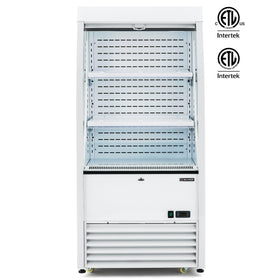
When you are going into the frozen food business, the freezer is the most important (and most expensive) piece of equipment you will buy. Since the freezer is essentially the backbone of your entire operation, your goal must be to get a commercial freezer that protects product quality, maintains food safety, and makes your workflow faster and more efficient.
A good freezer preserves texture, flavor, and shelf life. A bad one? It quietly eats into your margins through spoilage, inconsistency, and daily frustration.
Let’s break down how to get this right from the start.

What Types of Freezers Are Used in a Frozen Food Business?
Most successful frozen food businesses do not rely on just one type of commercial freezer: they use a combination of different freezers, depending on their scale of production, storage, and sales needs. So, there are about four kinds of frozen food business refrigerators, and they all serve different roles.
1. Upright Freezers (Organisation and Access)
Commercial upright freezers, in general, are the most important types of freezers in the frozen food business because they are easy to organise with shelves and compartments, making it faster to find and access products. Overall, they are better for high-turnover items.
Upright freezers are just like refrigerators, but for frozen goods. In the frozen food business, they are used for daily operations, for the storage of frequently used ingredients, and for packaged goods.
2. Chest Freezers (Bulk Storage Workhorses)
These are the deep, top-opening units you’ve probably seen in garages or back-of-house storage areas. Frozen food businesses use them for long-term storage because they can handle bulk inventory, and are more energy-efficient than many other types (the cold air stays inside when they are opened).
Since they are not very convenient for organising and grabbing items quickly, they are best for backup storage and storage of items that are less frequently accessed.
3. Commercial Reach-In Freezers
Commercial reach-in freezers are built specifically for business use: durable, powerful, and designed for constant opening and closing. They are excellent at maintaining consistent temperatures under heavy use, and they can handle frequent use excellently.
In the frozen food business, they are mostly used in kitchens, prep areas, or production spaces, where regular high-volume access is required.
Commercial upright freezers with fully adjustable shelves and enough storage capacity adapt as your menu changes. Stock up on frozen pizzas, ice cream, veggies, meats, or bulk ingredients without a squeeze.
4. Display Freezers (Customer-Facing Sales)
Commercial display freezers are the glass-door or open-top freezers you see in retail environments. Frozen food businesses mainly use them in storefronts, markets, or direct-to-customer locations where they need to showcase their products to customers, encourage impulse purchases, and/or keep their items visible and accessible.
 Key Factors to Consider When Choosing a Freezer for Frozen Food Business
If you are a small frozen food business with limited funds, you obviously cannot go out and invest in many expensive commercial freezers. What you need is a single commercial freezer that best matches the size of your business, and has all the features required for efficient, long-term service.
Here are the top 5 factors to consider when choosing a freezer for a frozen food business
1. Capacity (How Much You Actually Need)
You need a commercial refrigerator that matches the size of the inventory you intend to store and a little more, but is not too large for your space.
- Estimate your weekly production or inventory volume
- Add buffer space for growth
- Think in terms of usable space, not just total cubic feet
Too small, and you’ll constantly run out of space. Too large, and you’re wasting energy and money.
2. Temperature Consistency
In the frozen food business, the quality of your product directly depends on how consistently your freezer can perform. Look for a freezer with strong insulation, reliable thermostats, and even airflow.
Fluctuations in temperature may lead to freezer burn, a loss of texture, and even potential food safety issues.
3. Energy Efficiency
Consider the long-term operating cost, not just the current price, and ensure your freezer has been certified for energy efficiency. Remember, your freezer runs 24/7, and energy costs add up fast.
4. Speed of Freezing (Critical for Producers)
If you store pre-frozen goods, this is less critical, but if you have to freeze the food from scratch, consider a fast-freezing commercial freezer. Slow freezing is a problem in the frozen food business because it easily damages food quality. Fast freezing preserves it. Hence, the faster your commercial freezer can freeze items, the better.
5. Ease of Organization and Access
A commercial freezer with adjustable shelves is a must-have for a frozen food business. It reduces the wasted time searching for items, minimizing slower operations and mistakes.
For product visibility, go for upright commercial freezers.
Chest freezers are best for bulk storage. Chest freezers, specifically large capacity units with baskets, are best for frozen food businesses. They allow you to separate different types of frozen products while displaying them to customers at the same time.
6. Durability and Build Quality
Commercial environments are tough, and storage/display equipment takes a beating. Go for freezers and refrigerators made of stainless steel interiors/exteriors for heavy use. Ensure they have strong hinges and seals, and come from brands with proven reliability over time
7. Space and Layout
A freezer that doesn’t fit your workflow slows everything down. Measure your space carefully, consider door clearance and traffic flow, and think about how the staff will move around it.

Why Choosing the Right Freezer Matters (More Than You Think)
- It’s easy to treat a freezer as just another purchase, but in a frozen food business, it directly affects your product, your workflow, and your bottom line.
- It protects your product quality. The right freezer keeps your food tasting the way it should. Texture, moisture, and flavor all depend on proper freezing and storage.
- It reduces waste and loss. Inconsistent freezing leads to spoilage. Spoilage leads to lost revenue. A reliable freezer quietly saves you money every day.
- It improves efficiency: When your freezer is organized, accessible, and consistent, staff move faster, orders go out more smoothly, and mistakes decrease.
- It supports business growth. Outgrowing your freezer too quickly creates bottlenecks. Choosing the right setup early gives you room to scale without constant upgrades.
- It builds customer trust. If your product arrives in perfect condition every time, customers notice. Consistency builds loyalty, and that starts with how you store your food.
 The Bottom Line
The best freezer for your frozen food business isn’t just the biggest or the cheapest; it’s the one that fits your workflow, protects your product, and supports your growth. Your recipes and ingredients get the attention, but your freezer is what makes sure all that effort actually pays off. Choose wisely, and it becomes one of the most reliable tools in your business.
You may also be interested in how to organize a commercial freezer and why proper organization matters in the frozen food business.