Starting a smoothie shop sounds simple: fruit, ice, blend, serve. But once you get into it, you realise the difference between a smooth operation and daily chaos comes down to one thing: having the right equipment from day one.
When buying commercial kitchen equipment for a smoothie shop, the goal is to build a setup that is fast enough for peak hours, consistent in quality, easy to clean and maintain, and scalable as you grow. All the smoothie shop equipment can be classified into preparation, refrigeration, ice making, and prep. Get this right, and your shop runs smoothly.

Top 10 Smoothie Shop Equipment You Need
1. Commercial Blender (Your Most Important Investment)
If you expect volume, plan for at least 2–3 high-capacity blenders, not one. Go for commercial blenders with:
- High horsepower (at least 2–3 HP for commercial use)
- Durable blades that can handle ice and frozen fruit
- Programmable settings for consistency.
The commercial blender is the most important piece of equipment for a smoothie shop. Everything you sell goes through a blender. Speed, consistency, and durability all start here.
Wilprep's blender features a toggle switch that lets you choose between HIGH and LOW settings to effortlessly whip up everything from ice cream to hot soup, catering to all your customers' cravings. The powerful 2 hp motor hits a whopping 30,000 rpm to ensure your food gets mixed in the blink of an eye, making this blender a true mighty workhorse in any commercial setting.
2. A Commercial Refrigerator (Keeping Ingredients Fresh and Ready)
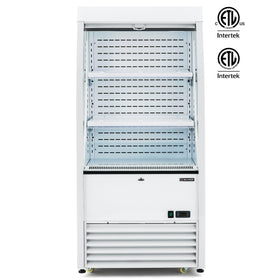
Smoothie shops require commercial refrigerators, usually undercounter fridges, and upright refrigerators. Depending on the size of your business and the nature of your storage needs, consider:
- Commercial reach-in refrigerators. Necessary for storing fruits, dairy, juices, and add-ins. In a smoothie shop, freshness is essential for flavour. Also critical for food safety.
- Consider undercounter fridges for easy access during prep with enough capacity for your daily volume and consistent temperature control.
With 17.6 cu. ft. to 72.8 cu. ft of storage and fully adjustable shelves, Wilprep's UL-certified commercial fridges adapt as fast as your menu changes. Stock up on family-sized trays, tall bottles, or bulk ingredients without a squeeze

3. A Freezer (For Frozen Fruit and Ice Cream Bases)
For a smoothie shop, you need at least one commercial freezer for easier organisation. A commercial reach-in freezer is a great option as it is optimised to perform in highly demanding commercial environments, and has enough capacity to accommodate the different items you'll need to freeze.
For bulk storage, consider a chest freezer, as it takes up more capacity without occupying too much space.
Frozen ingredients are the backbone of most smoothies, and you need commercial-sized freezers. Remember, you will have to rely heavily on frozen fruit, ice, and possibly frozen yoghurt or sorbet.
4. At Least One Ice Machine
An ice machine with enough production capacity to match peak demand is essential in a smoothie shop. Most small smoothie shops use compact undercounter ice machines. A compact 750W ice machine can produce about 126 cubes in each batch at a rate of 265 pounds (120 kg) per day.
In a smoothie shop, ice is not optional: it’s a core ingredient. Look for an ice machine with enough production capacity to match peak demand. Buying ice gets expensive fast and creates inconsistency.
5. Prep Tables and Workstations
Prep table refrigerators with built-in refrigeration are ideal for a smoothie shop. Refrigerated sandwich prep tables are common in smoothie shops, as they provide enough volume (often 10+cu.ft), a full-length cutting board, and GN 1/6 pans, offering ample space for smooth preparation as well as backup ingredient storage
Go for a stainless steel prep table for durability and easy cleaning, and one that best fits the available space. Remember, you need space to prep, assemble, and move efficiently.

6. Ingredient Storage Containers
You need clear, stackable containers with airtight seals and easy labelling systems.
These are essential for storing and prepping fruit, powders, and toppings that need to be portioned and ready.
7. POS System (Point of Sale)
For a smoothie business, you need a POS system with a user-friendly interface, easy inventory tracking, and convenient integration with apps and online ordering platforms. Most smoothie businesses use Square and Toast. A good POS system is how you take orders and track your business. You need to process payments, manage orders, and monitor sales.
8. Cups, Lids, and Straws (Your Packaging)
Cups, lids, and straws. Look for durable, leak-resistant cups of multiple sizes. Every smoothie shop needs durable, leak-resistant cups with multiple sizes. They play a dual role: serving your customers and advertising your shop/business. These form part of your customer experience and branding.
9. Sinks and Dishwashing Setup
A three-compartment sink for washing, rinsing, and sanitising is essential in a smoothie shop, as well as a handwashing sink. You’ll need these to stay clean and compliant. Health codes require proper washing stations.
10. Smallwares (The Essential)
Smallwares are the little tools that keep everything moving in a smoothie shop. You can’t run smoothly without them. You need the following smallwares:
- Measuring cups and scoops
- Knives and cutting boards
- Blending pitchers
- Towels and cleaning supplies
Smoothie Shop Equipment List
| Equipment | Purpose | Key Buying Consideration |
| Commercial Blender | Blend smoothies quickly and consistently | Power, durability, programmability |
| Refrigerator | Store fresh ingredients | Capacity, accessibility |
| Freezer | Store frozen fruit and bases | Organisation, temperature stability |
| Ice Machine | Provide a consistent ice supply | Output capacity |
| Prep Tables | Workspace for assembly | Layout, stainless steel build |
| Storage Containers | Organize ingredients | Airtight, stackable |
| POS System | Handle orders and payments | Ease of use, integrations |
| Cups and Lids | Serve customers | Durability, branding |
| Sinks | Meet health standards | Proper setup and placement |
| Smallwares | Daily operations | Completeness and quality |
Practical Tips for Starting a Smoothie Shop Business
- Design your smoothie shop for speed and efficiency. Keep blenders, ice, and ingredients within arm’s reach, minimise steps between stations, and optimise for a busy shift, not a quiet one.
- Always prep ahead. Cut fruit, portion ingredients, and organise before peak hours. Speed during a rush depends on what you did before the rush, not before it.
- Standardise all your recipes. Consistency builds trust in your customers. Use measured portions, train staff to follow exact recipes, and remember to use blender presets when possible.
- Don’t underestimate cleaning time. Smoothie shops get messy fast. Keep a clean environment by cleaning as you go and choosing equipment that is easy to clean and maintain.
- Know your menu before you buy. Your equipment should match your offerings. If you mainly serve protein shakes, you need more power. For acai bowls, you need stronger blending and prep space. For high volume, you need some extra equipment to reduce redundancy.
 The Bottom Line
Starting a smoothie shop isn’t about having the most equipment; it’s about having the right equipment, set up the right way. If you focus on a strong blender setup, an efficient workflow, reliable cold storage, and smart prep and organisation, you can create a shop that’s not just functional, but fast, consistent, and ready to grow. And that’s what turns a simple idea into a business that actually works.
You may also be interested in how to start a salad bar and how that compares to starting a smoothie business.