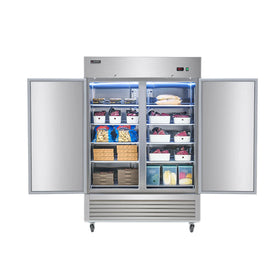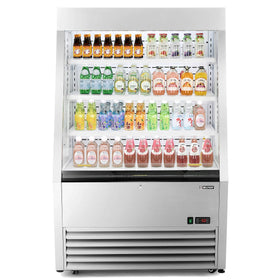
Choosing the right freezer is an important decision for any household, and one of the key considerations is the type of defrost system it uses. Freezers generally come in two main types: manual defrost and frost-free (no-frost). Understanding the differences between these two types can help you choose the freezer that best fits your lifestyle, storage needs, and budget.
What Is a Frost Free Freezer
A frost-free freezer, also known as an auto-defrost freezer, is designed to prevent ice buildup automatically, eliminating the need for manual defrosting. It works by periodically warming the cooling coils just enough to melt any frost that has formed, then draining the resulting water away before returning to normal freezing temperatures. This process keeps the interior free of ice, maintains consistent cooling, and maximizes storage space.
Frost Free Freezer Working Principle
Frost-free freezers rely on an automatic defrost system that typically includes three key components: a heating element, a fan, and a timer. During normal operation, the freezer cools the interior just like any standard unit. However, at regular intervals—usually every 6 to 12 hours—the system activates a short defrost cycle.
During this cycle, the heating element gently warms the evaporator coils to melt any accumulated frost. The fan helps circulate air evenly throughout the freezer, preventing moisture from settling and forming ice. The melted frost then drains through a small channel into a pan located at the bottom or back of the unit, where it eventually evaporates.
Key Benefits of Frost Free Freezer
One of the biggest advantages of a frost-free freezer is convenience. Since the appliance handles defrosting on its own, users never need to unplug the unit or manually remove ice buildup, saving both time and effort.
Frost-free models also provide more even temperature distribution. The built-in fan circulates cold air throughout the compartment, reducing hot and cold spots and helping food freeze more uniformly. This is especially beneficial for upright freezers and refrigerator-freezer combinations.
Trade-Offs
Despite their convenience, frost-free freezers do have some drawbacks. They typically consume more energy than manual defrost models because of the additional components involved, such as heaters and fans that run during defrost cycles.
They also tend to have a higher upfront cost, reflecting their more advanced technology and added features.
Another potential downside is the risk of freezer burn. The continuous air circulation inside frost-free freezers can draw moisture out of food, leading to a dry texture if items are not properly sealed. While this issue can be minimized with airtight packaging, it remains an important consideration for long-term food storage.
What Is a Manual Defrost Freezer
A manual defrost freezer is a type of freezer that requires you to periodically remove built-up ice yourself, as it does not have an automatic defrost system. Over time, moisture inside the freezer freezes onto the walls and shelves, forming frost that can reduce storage space and efficiency. To defrost it, you need to turn off the freezer, let the ice melt, and clean out the water before restarting it.
Manual Defrost Freezer Working Principle
Manual defrost freezers operate using a simple cooling system without built-in heaters, fans, or timers for automatic defrosting. As the freezer runs, moisture from the air inside the unit condenses and freezes when it comes into contact with cold interior surfaces. This process gradually creates a layer of frost along the walls, shelves, and sometimes around stored items.
Because there is no automatic mechanism to remove this frost, it continues to accumulate over time. When the ice layer becomes thick—typically around a quarter inch—it begins to reduce storage space and restrict airflow. At this point, the freezer must be manually defrosted. This involves turning off or unplugging the unit, removing all food, and allowing the ice to melt completely before cleaning and restarting the freezer.
Key Advantages of a Manual Defrost Freezer
One of the main benefits of a manual defrost freezer is its simple construction. With fewer moving parts and no complex defrost system, these freezers are generally more durable and less prone to mechanical failure, resulting in lower maintenance and repair costs over time.
They are also known for being more energy-efficient. Since they do not rely on heating elements or fans to perform defrost cycles, they consume less electricity during regular operation. This makes them an appealing option for users looking to reduce energy bills or environmental impact.
In addition, manual defrost freezers maintain a more stable internal temperature. Without periodic warming cycles, the temperature remains consistently low, which helps preserve food quality over longer periods. This makes them particularly well-suited for storing bulk items, meats, and other temperature-sensitive foods.
Manual Defrost Freezer Drawbacks
Despite their advantages, manual defrost freezers do require more effort to maintain. The defrosting process can be time-consuming, often taking several hours and requiring advance planning to temporarily store frozen food elsewhere. For busy households, this can be inconvenient.
Frost buildup can also reduce usable storage space and interfere with proper air circulation, which may impact overall cooling efficiency if not addressed regularly. Shelves and compartments can become difficult to use as ice accumulates.
Frost Free vs Manual Defrost Freezer: Side-by-Side Comparison
|
Feature |
Manual Defrost Freezer |
Frost-Free Freezer |
|
Defrosting Method |
Requires manual defrosting |
Automatic defrosting |
|
Convenience |
Low – time-consuming and requires planning |
High – hands-off, set-and-forget |
|
Energy Consumption |
Lower – no heaters or fans |
Higher – uses heating elements and fans |
|
Temperature Stability |
More stable – no defrost cycles |
Slight fluctuations during defrost cycles |
|
Food Preservation |
Better – less risk of freezer burn |
Moderate – circulating air can dry food if not sealed |
|
Upfront Cost |
Usually cheaper |
Higher due to advanced features |
|
Maintenance |
Simple, fewer parts, fewer repairs |
More complex, potential repairs due to extra components |
|
Storage Space |
Can be reduced by frost buildup |
Full storage space maintained |
|
Best For |
Energy-conscious users, long-term storage, bulk freezing |
Busy households, convenience, low-maintenance usage |
Frost Free vs Manual Defrost Freezer: Temperature Stability
Temperature stability is a key factor in freezer performance, as consistent cold helps preserve the quality and safety of stored food. Manual defrost freezers excel in this area because they operate without periodic defrost cycles. The cooling remains continuous and uninterrupted, providing a stable and uniform temperature throughout the compartment. This stability is particularly important for delicate or temperature-sensitive items such as homemade soups, fresh meats, or baked goods, where even slight fluctuations could affect texture or taste.
In contrast, frost-free freezers use timed defrost cycles, which briefly warm the evaporator coils to melt frost. While this process is usually quick and largely unnoticeable, it can cause minor temperature fluctuations inside the freezer. For most everyday frozen foods, these brief changes are harmless, but highly sensitive items may experience slightly less consistent cooling compared to a manual defrost unit.
Frost Free vs Manual Defrost Freezer: Food Preservation
Food preservation is another important consideration. Manual defrost freezers reduce the risk of freezer burn because they maintain still air and stable humidity levels inside the compartment. Since there is no fan circulating dry air, moisture loss from food is minimized, helping preserve texture, flavor, and nutritional quality over long-term storage. This makes manual defrost models ideal for storing meats, fruits, vegetables, and other items that may be vulnerable to drying out.
Frost-free freezers, however, rely on circulating air to prevent frost buildup. While this keeps the freezer clean and ice-free, it can also cause food to dry out if it is not properly sealed in airtight packaging. Using freezer-safe bags, vacuum-sealed containers, or tightly covered boxes can help protect food from freezer burn. Despite this, for most households, the convenience and low maintenance of a frost-free unit outweigh the slight risk of moisture loss.
Frost Free vs Manual Defrost Freezer: Energy Efficiency and Cost
Manual defrost freezers are more energy-efficient and cost-effective, with stable cooling and lower upfront and operating costs, but require time-consuming manual defrosting. Frost-free freezers offer convenience with automatic defrost and low maintenance, though they consume slightly more energy and have a higher purchase price, with modern improvements narrowing the efficiency gap.
Frost Free vs Manual Defrost Freezer: Convenience and Maintenance
Manual defrost freezers offer reliability and a simpler design but require regular, time-consuming defrosting, making them less convenient for busy households. Frost-free freezers, on the other hand, provide maximum convenience with automatic defrost cycles and even air circulation, reducing maintenance and fitting well into hectic lifestyles, making them ideal for users who prioritize ease of use and low-maintenance operation.
Frost Free vs Manual Defrost: Which One Should You Choose?
When deciding between a manual defrost and a frost-free freezer, several key factors can help you make the best choice for your household and lifestyle.
Lifestyle
For households with a fast-paced lifestyle, frequent meal prep, or children in the home, frost-free freezers are the ideal choice. Their automatic defrost system eliminates the need to plan and execute time-consuming manual defrosting, while even air circulation ensures consistent cooling and prevents frost from interfering with storage space. Busy families can rely on these freezers to keep food accessible and ready-to-use at all times, without the interruptions of melting ice or rearranging frozen items.
Storage
If you regularly buy and store large quantities of food, such as seasonal produce, bulk meats, or frozen supplies for long-term use, a manual defrost freezer—especially a chest freezer—is often the better option. Manual units maintain a stable internal temperature and minimize air circulation, which helps preserve food quality and reduces the risk of freezer burn. Chest freezers also retain cold air better when opened, allowing for extended storage during power outages or for infrequent access.
Budget
For those looking to minimize upfront costs and long-term operating expenses, manual defrost freezers are usually more cost-effective. They have a simpler design with fewer components, which reduces purchase price, lowers the likelihood of repairs, and consumes less electricity over time. While defrosting requires effort, the savings in both purchase and energy costs can make a manual freezer the most practical choice for budget-conscious buyers.
Energy Efficiency
For households concerned with electricity consumption and long-term energy costs, a manual defrost freezer is typically more efficient. Without fans or heating elements for automatic defrost cycles, these units draw less power and maintain consistent cooling with lower energy use. Frost-free freezers have improved in efficiency thanks to modern insulation and smart sensors, but they generally still use slightly more electricity than manual models.
Noise Level
Noise can also influence your decision. Manual defrost freezers operate quietly since they have no circulating fans, making them suitable for kitchens, basements, or living areas where noise might be an issue. Frost-free freezers, however, include fans and compressors that may generate more noticeable sound during operation, so consider placement carefully if a quieter appliance is important.
Frost Free vs Manual Defrost Freezer: Pros and Cons
Manual Defrost Freezer: Pros and Cons
|
Pros |
Cons |
|
More energy-efficient (no heaters or fans) |
Requires manual defrosting |
|
Lower upfront cost |
Time-consuming maintenance |
|
Stable internal temperature |
Ice buildup reduces storage space |
|
Better at preventing freezer burn |
Airflow can be restricted by frost |
|
Simple design, fewer repairs |
Less convenient for daily use |
Frost-Free Freezer: Pros and Cons
|
Pros |
Cons |
|
No manual defrosting required |
Higher energy consumption |
|
Very convenient and low maintenance |
Higher purchase cost |
|
Even temperature distribution |
May cause freezer burn if food isn’t sealed |
|
No ice buildup, full storage space |
Slight temperature fluctuations during cycles |
|
Modern features and design |
More components, potential repair costs |
FAQ
How often manual defrost freezer
A manual defrost freezer should be defrosted whenever the frost layer reaches about a quarter inch (6 mm) thick, which for most households is typically every 3 to 6 months. The exact frequency depends on factors such as humidity levels, how often the door is opened, and the amount of food stored, since higher moisture and frequent use accelerate frost buildup. Regular defrosting is important to maintain optimal performance, as excessive frost can reduce storage space, restrict airflow, and make the freezer work harder, increasing energy consumption and potentially affecting food quality.
What are the disadvantages of frost-free freezers?
The main disadvantages of frost-free freezers include higher energy consumption, since the built-in fans and heating elements used for automatic defrosting require more electricity than manual models.
They also have a higher upfront cost due to their more complex design and additional components. The constant circulation of air can sometimes cause freezer burn or drying of food if items are not properly sealed, and slight temperature fluctuations may occur during defrost cycles, which can briefly affect sensitive foods.
Finally, because they contain more parts, frost-free freezers can be more prone to repairs and may require more maintenance over time compared to simpler manual defrost units.
What is the disadvantage of manual defrost?
The main disadvantage of a manual defrost freezer is that it requires regular, time-consuming defrosting. Unlike frost-free models, ice naturally builds up on the walls and shelves, which reduces storage space and restricts airflow.
To maintain optimal performance, the freezer must be unplugged, emptied, and allowed to thaw, a process that can take several hours and requires advance planning. This makes manual defrost freezers less convenient for busy households, and postponing defrosting can lead to inefficient cooling and potential impact on food quality.
Which is better, No Frost or manual defrost?
Whether a frost-free (no‑frost) or manual defrost freezer is better depends on your priorities and usage. Frost-free freezers are ideal for those who value convenience and low maintenance, as they automatically prevent ice buildup, provide even temperature distribution, and fit well in busy households.
Manual defrost freezers, on the other hand, are better for energy efficiency, cost savings, and long-term food preservation, offering stable temperatures and simpler designs that reduce the risk of freezer burn.
Ultimately, frost-free models are best for ease of use, while manual defrost units excel in efficiency and food quality, so the right choice depends on your lifestyle, freezer usage, and storage needs.