How Long Can Salmon Last in the Fridge?

|
Type of Salmon |
Fridge Shelf Life |
|
Raw salmon |
1–2 days |
|
Cooked salmon |
3–4 days |
|
Thawed salmon |
1–2 days after thawing |
|
Smoked salmon |
1–2 weeks (unopened) |
|
Defrosted salmon |
cook immediately |
|
Vacuum-sealed salmon |
1–2 weeks (unopened) |
How Long Does Fresh Salmon Last in the Fridge?
Fresh or raw salmon has a particularly short shelf life and can only last 1-2 days in the fridge before it goes bad. It is advisable to cook up fresh salmon as quickly as possible or store it in a freezer where it can last for weeks.
How Long Does Cooked Salmon Last in the Fridge?
Cooked salmon can last for 3–4 days in the fridge if you store it properly. To ensure that your salmon stays fresh and healthy for up to 4 days, take the following steps:
- Refrigerate it within 2 hours after cooking to prevent bacterial growth.
- Store it in an airtight container or wrap it tightly in plastic wrap or foil.
Cooked Salmon Lasts Longer in the Freezer
If you don't plan to eat the cooked salmon within the recommended timeframe, consider freezing it for longer storage. In the freezer, cooked salmon can last for up to 2–3 months.
When you take it out of the fridge, make sure you reheat the cooked salmon to 165°F (74°C) before consuming. This is a crucial step for food safety.
How Long Does Raw Salmon Last in the Fridge?
Raw salmon typically lasts only 1–2 days in the fridge, even if you store it at or below 40°F (4°C). Because it is highly perishable, it is always advised to cook your raw salmon as quickly as possible and not leave it in the fridge for too long.
How to Store Raw Salmon in the Fridge
If not properly stored in the fridge, raw salmon can go bad even within a day. To ensure your raw salmon is properly stored in the fridge:
- Keep it in its original packaging or vacuum-sealed so it retains its freshness.
- If not in its original packaging, store it in a plastic bag or an airtight container.
- Place it on the bottom shelf of the fridge to avoid contaminating other foods with raw juices.
If you don’t plan to eat it within 1–2 days, freeze your raw salmon so it can last even longer.
How Long Does Thawed Salmon Last in the Fridge?
The best method for thawing fish is in the fridge, where the temperature is stable and safe. However, thawing salmon in the fridge does not significantly increase its lifespan.
Thawed salmon typically lasts about 1–2 days before cooking. To ensure your thawed salmon is safe for consumption, pay attention to the following tips:
- Don't refreeze thawed salmon unless it has been thawed in the fridge.
- If you thawed salmon using a cold water or microwave method, you must cook it immediately. Cooked salmon can then be stored for an additional 3–4 days.
How Long Does Defrosted Salmon Last in the Fridge?
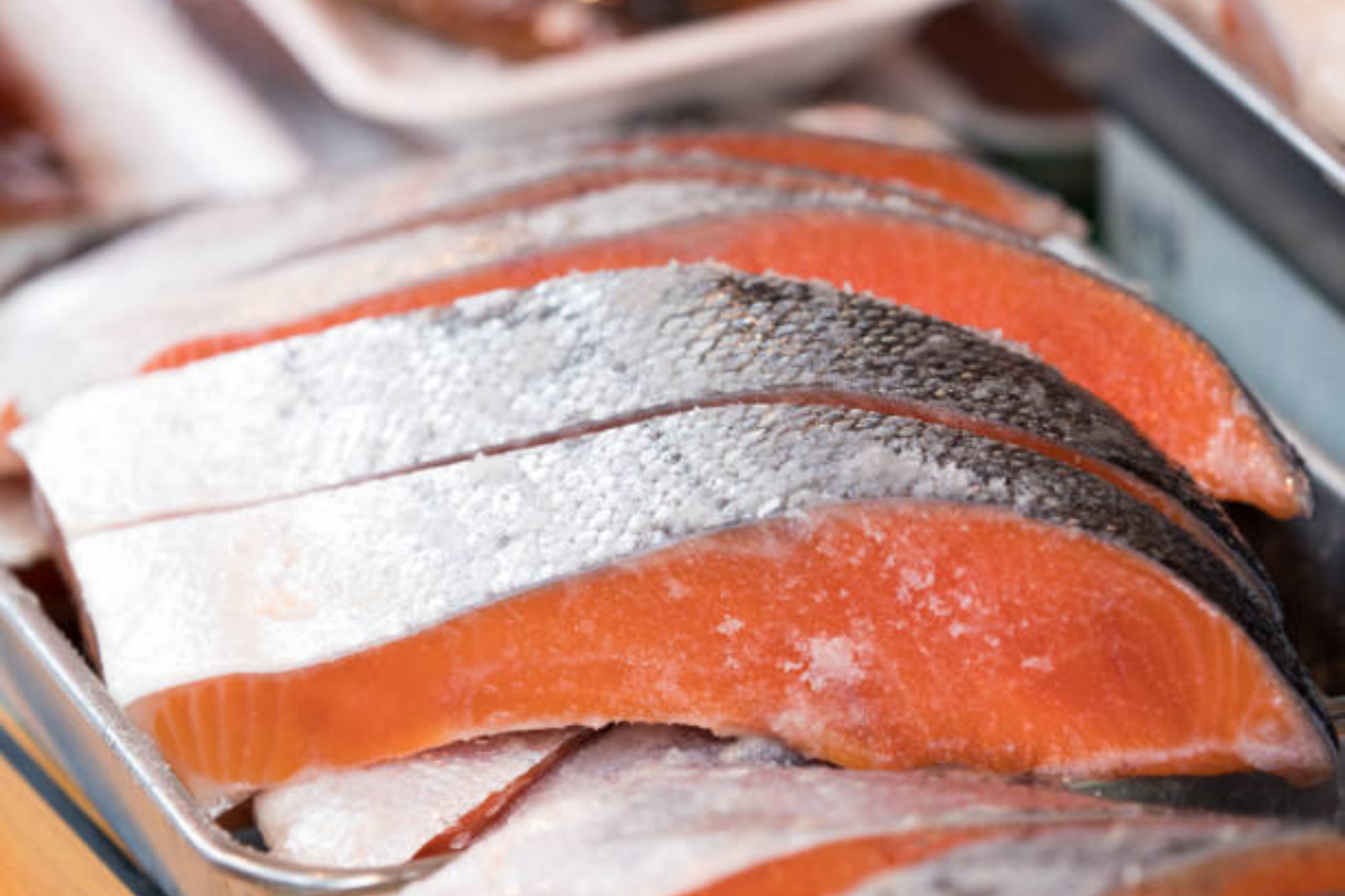
If your salmon was defrosted in the fridge, it will be good for 1–2 days. However, if it was defrosted using quicker methods like cold water or microwave, you should cook it right away.
- Always defrost in the fridge for best results.
- Once defrosted, cook salmon within 1–2 days.
- Do not refreeze defrosted salmon unless it has been thawed in the fridge.
Smoked Salmon: How Long Does it Last in the Fridge?
Smoked salmon significantly differs from fresh salmon and can last 1–2 weeks in the fridge as long as it is unopened. Once opened, it might begin to lose its flavor within 5–7 days. For the best flavor and also for your food safety, it is advisable to consume smoked salmon within 5-7 days.
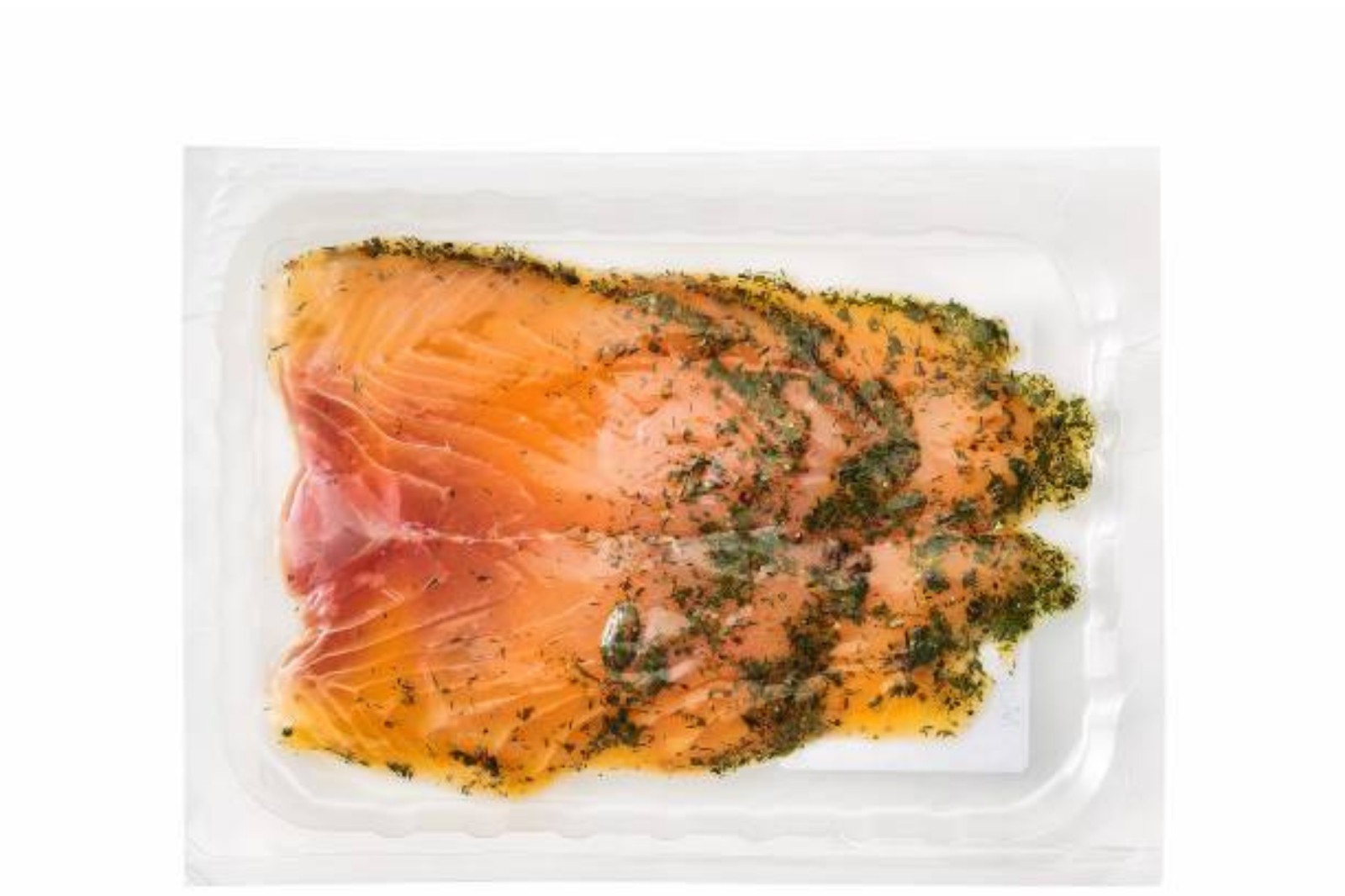
Tips for Storing Smoked Salmon in the Fridge
- Keep it sealed in its original packaging or in an airtight container.
- Refrigerate immediately and keep it below 40°F (4°C) to preserve its quality.
- Smoked salmon can also be frozen if you want to extend its shelf life for up to 2–3 months.
How Long Does Vacuum-Sealed Salmon Last in the Fridge?
As long as it remains unopened,vacuum-sealed salmon can last 1–2 weeks in the fridge. However, once you’ve opened the packaging, treat it like fresh salmon and eat it within 1–2 days.
Tips for Storing Vacuum-Sealed Salmon in the Fridge
- Keep it in its original vacuum-sealed packaging until ready to use.
- After opening, transfer to an airtight container or plastic wrap and refrigerate promptly.
- If you won’t use it within the given timeframe, freeze it for up to 6 months.
Tips for Storing Salmon in the Fridge
Proper storage is the best way to keep salmon fresh, flavorful, and safe to eat.
- Whether the salmon is raw or cooked, it should always be refrigerated as soon as possible and kept at a temperature of 40°F (4°C) or lower.
- The coldest area of the fridge is usually the back of the bottom shelf, which is a better storage spot than the refrigerator door where temperatures fluctuate more often.
- For raw salmon, remove any store packaging if it traps excess moisture, then pat the fish dry gently with paper towels before wrapping it tightly in plastic wrap, aluminum foil, or placing it in an airtight container.
- Limiting exposure to air helps slow bacterial growth and prevents the fish from drying out.
- For even better freshness, some people place the wrapped salmon on a tray or bowl filled with ice and replace the ice as it melts.
- Cooked salmon should be allowed to cool slightly before refrigeration, but it should not sit at room temperature for more than two hours.
- Store leftovers in a sealed airtight container to lock in moisture and prevent the salmon odor from affecting other foods in the refrigerator. Labeling the container with the storage date can also help you keep track of freshness.
- Keep salmon away from ready-to-eat foods such as fruits, salads, or bread to avoid cross-contamination.
- Always use clean utensils and surfaces when handling seafood.
- If you know you will not eat the salmon within 1 to 2 days for raw fish or 3 to 4 days for cooked salmon, freezing is the safest option.
- Properly wrapped salmon can maintain good quality in the freezer for around 2 to 3 months.
Best Recommended Refrigerators for Storing Salmon
The quality of your refrigerator plays a huge role when it comes to storing delicate items like salmon.
Wilprep’s Kitchen has a variety of reach-in refrigerators, perfect for your home or commercial kitchen, and with advanced features that make storing perishable items (like salmon) not only safe, but also easy and convenient.
These reach-in refrigerators will become the backbone of your kitchen: providing steady and reliable refrigeration and maximizing energy efficiency.
Whether you have a commercial kitchen, a really big private kitchen, or a small home kitchen, you are guaranteed to find a perfect match.
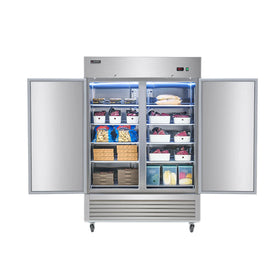
29" Commercial Solid Door Reach-In Freezer 23.3 cu. ft. Capacity

81'' Commercial Solid Door Reach-In Refrigerator 61 cu. ft. Capacity

More from Wilprep
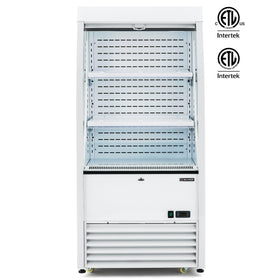
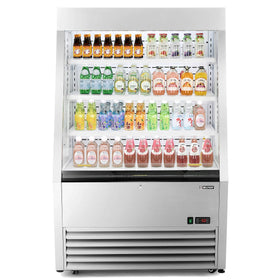
These are just a few of the commercial display refrigerators in Wilprep’s collection. If you are still undecided about which model best suits your business needs, you can refer to Wilprep’s official website for more options.
Wilprep’s collection of commercial refrigerators contains a variety of models, including display refrigerators and open-air models to suit the needs of diverse businesses.
In addition to top-quality refrigerators, Wilprep offers other kinds of kitchen equipment to take your business to the next level.
Check out Wilprep’s commercial convection ovens, commercial gas ranges, and even soup kettles.
FAQs
How long does raw salmon last in the fridge after defrosting?
After defrosting, raw salmon can usually last in the fridge for about 1 to 2 days if it is kept properly refrigerated at 40°F (4°C) or below. The safest way to thaw salmon is in the refrigerator, as this keeps the fish at a safe temperature during the defrosting process. Once thawed, the salmon should be cooked within a couple of days for the best quality and safety. If the salmon was thawed using cold water or a microwave, it should be cooked immediately rather than stored again in the fridge.
How long does salmon last in the freezer?
Salmon can last in the freezer for quite a long time, but its quality depends on how it is packaged and stored. Raw salmon can typically be frozen for up to 2 to 3 months while maintaining the best flavor and texture, though it may remain safe to eat for up to 6 months or longer if kept consistently frozen at 0°F (-18°C). Cooked salmon also freezes well and generally lasts about 2 to 3 months for best quality.
How long does cooked salmon last outside the fridge?
Cooked salmon should not be left outside the fridge for more than 2 hours at room temperature (or 1 hour if the temperature is above 90°F / 32°C). After this time, bacteria can grow quickly, making it unsafe to eat even if it still looks and smells fine.
Can raw salmon last 4 days in the fridge?
No, raw salmon generally should not last 4 days in the fridge. Fresh raw salmon is typically safe for only 1 to 2 days when stored properly at or below 40°F (4°C). After that, the risk of bacterial growth increases significantly, even if it still looks or smells okay.
Can I cook salmon that has been in the fridge for 5 days?
In most cases, no—it’s not recommended to cook and eat raw salmon that has been in the fridge for 5 days. Fresh raw salmon is typically safe for only 1–2 days in the refrigerator, even if it looks and smells fine. After 5 days, the risk of bacterial growth and spoilage is high, and cooking it won’t always make it safe because some bacteria can produce toxins that aren’t destroyed by heat.
How to tell if salmon has gone bad?
You can usually tell salmon has gone bad by checking its smell, texture, and appearance.
Fresh salmon should smell mild and slightly ocean-like. If it has gone bad, it often develops a strong sour, fishy, or ammonia-like odor, which is one of the clearest warning signs. The texture is another key indicator—spoiled salmon may feel slimy, sticky, or overly soft instead of firm and moist. Visually, bad salmon can look dull, grayish, or discolored, and may even develop milky or dark spots on the surface.
If you notice any mold, unusual liquid buildup, or a noticeably off smell, it’s best to discard it immediately. When in doubt, it’s safer not to eat it, since spoiled fish can cause foodborne illness even if it looks only slightly off.