Refrigerators are one of the heaviest and most important appliances in any home, yet their weight is often overlooked until it’s time to move or replace one. From mini fridges to large commercial refrigerators, the weight can vary widely depending on size, design, and built-in features like ice makers or smart technology. Understanding how much a refrigerator weighs is essential for planning a safe move, checking floor load capacity, or choosing the right model for your space.
What Does Refrigerator Weight Mean?
Refrigerator weight refers to the total weight of the appliance, including all of its built-in components such as the compressor, cooling system, insulation, shelves, doors, and exterior casing. Refrigerator weight is usually measured in pounds (lbs) in the United States, although some manufacturers may also list it in kilograms (kg).
How Much Does a Standard Refrigerator Weigh?
On average, a refrigerator weighs between 150 and 400 pounds (68 to 181 kg), depending on its size, design, and features. Smaller models like mini fridges are much lighter, typically weighing around 40 to 80 pounds, while standard household refrigerators fall into a much heavier range due to added insulation, shelving, compressors, and advanced cooling systems.
Most common home refrigerators, such as top-freezer and bottom-freezer models, usually weigh between 150 and 300 pounds. These are considered mid-range appliances and are the easiest full-size units to move, though they still often require two people or a dolly for safe transportation.
Larger and more modern styles, such as side-by-side and French-door refrigerators, tend to be heavier, often ranging from 220 to over 400 pounds. Their increased weight comes from wider frames, dual doors, built-in water and ice dispensers, and more complex internal components.
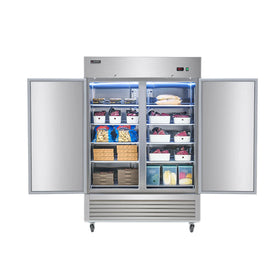
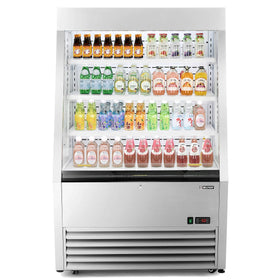
At the top end, commercial refrigerators like display refrigerators, reach-in refrigerators, prep table refrigerators and so on, can weigh 400 to 800 pounds or more, as they are built with heavy-duty materials and designed for continuous operation in restaurants or industrial environments. Overall, the average refrigerator weight for most households sits around the mid-200-pound range.

Wilprep Commercial Refrigerators
Upgrade your kitchen storage with high-performance commercial refrigeration designed for durability, efficiency, and large-capacity cooling. Wilprep refrigerators are built for restaurants, cafés, and food businesses that require consistent temperature control and reliable performance.
- Heavy-duty stainless steel construction
- Energy-efficient cooling system
- Spacious storage capacity for commercial use
- Reliable temperature stability
Refrigerator Weight by Capacity
One of the biggest factors affecting refrigerator weight is its internal storage capacity, typically measured in cubic feet (cu. ft.). In general, larger-capacity refrigerators weigh more because they contain larger compressors, more insulation, and additional shelving and door components.
However, capacity alone does not determine total weight. The refrigerator’s design, materials, and configuration also play a major role.
|
Refrigerator Type |
Capacity |
Estimated Weight |
|
Top-Freezer Refrigerator |
20 cu. ft. |
155–200 lbs |
|
Bottom-Freezer Refrigerator |
22–25 cu. ft. |
200–280 lbs |
|
Side-by-Side Refrigerator |
25–28 cu. ft. |
250–350 lbs |
|
French-Door Refrigerator |
29 cu. ft. |
350+ lbs |
|
Mini Fridge |
1.7–4.5 cu. ft. |
40–80 lbs |
|
Compact Apartment Refrigerator |
7–10 cu. ft. |
90–150 lbs |
|
Commercial Refrigerator |
40–70 cu. ft. |
400–800+ lbs |
Pro Tip
The average weight per cubic foot of a standard refrigerator is approximately 10 to 15 pounds, according to appliance technician estimates from Don Fuller Appliance Repair.
Estimated Refrigerator Weight≈(10 to 15)×Cubic Feet
This estimate can help you roughly calculate how heavy a refrigerator may be before checking the official specifications.
Weight by Refrigerator Type
Different refrigerator styles often have very different weight ranges.
Mini Fridge Weight (40–80 lbs)
Mini fridges are the lightest category, designed for dorm rooms, offices, or small apartments. Their compact size and minimal insulation make them easy to move and place almost anywhere.
Top-Freezer Refrigerator Weight (150–250 lbs)
This is one of the most traditional household designs. With the freezer compartment on top, these models are relatively lightweight compared to larger modern units and are easier to transport during home moves.
Bottom-Freezer Refrigerator Weight (180–300 lbs)
These models tend to weigh slightly more due to the pull-out freezer drawer mechanism and added structural support at the base. They also often include more advanced cooling systems.
Side-by-Side Refrigerator Weight (220–350 lbs)
Side-by-side models split the fridge and freezer vertically. The added width, dual cooling systems, and built-in features like water dispensers contribute to increased weight.
French-Door Refrigerator Weight (250–400+ lbs)
French-door refrigerators are among the heaviest residential units. Their wide double doors, bottom freezer drawers, and premium features such as smart displays, large ice makers, and thicker insulation all add substantial weight.
Commercial Refrigerator Weight (400–800+ lbs)
Designed for restaurants, supermarkets, and industrial use, commercial refrigerators are built with heavy-duty compressors, reinforced steel construction, and high-capacity storage—making them significantly heavier than residential models.
|
Refrigerator Type |
Average Weight |
|
Mini Fridge |
40–80 lbs |
|
Top-Freezer Refrigerator |
150–250 lbs |
|
Bottom-Freezer Refrigerator |
180–300 lbs |
|
Side-by-Side Refrigerator |
220–350 lbs |
|
French-Door Refrigerator |
250–400+ lbs |
|
Commercial Refrigerator |
400–800+ lbs |
Weight by Refrigerator Brands
The weight of a refrigerator is influenced more by model type, capacity, and features than by brand alone. However, different brands tend to fall into slightly different weight ranges based on their design philosophy, materials, and feature sets.
LG Refrigerator Weight
LG refrigerators typically weigh 200–400 lbs, with French-door models often around 300+ lbs. Their heavier weight usually comes from advanced features like smart displays, larger capacities, and multi-zone cooling systems.
Samsung Refrigerator Weight
Samsung refrigerators are generally in the 220–450 lbs range, especially for premium French-door and smart models. High-end units tend to be heavier due to added technology such as digital panels, ice/water systems, and thicker insulation.
Whirlpool Refrigerator Weight
Whirlpool models are often slightly lighter and more balanced, usually around 200–350 lbs for full-size refrigerators. The brand focuses more on practicality and durability rather than heavy smart features, which helps keep weight moderate.
GE (General Electric) Refrigerator Weight
GE refrigerators typically fall in the 180–400 lbs range depending on configuration. Top-freezer models are lighter, while French-door and side-by-side units are heavier due to larger builds and added features.
Frigidaire Refrigerator Weight
Frigidaire is known for more budget-friendly and simpler designs, with most models weighing around 150–300 lbs. Their reduced feature complexity often results in lighter overall weight compared to premium brands.
Bosch Refrigerator Weight
Bosch refrigerators tend to be 250–400+ lbs, especially in counter-depth and built-in styles. They often use high-quality materials and dense insulation, which increases overall weight.
|
Brand |
Typical Weight Range (Full-Size Models) |
|
LG |
200–400 lbs |
|
Samsung |
220–450 lbs |
|
Whirlpool |
200–350 lbs |
|
GE (General Electric) |
180–400 lbs |
|
Frigidaire |
150–300 lbs |
|
Bosch |
250–400+ lbs |
Factors Affect the Weight of a Refrigerator
The weight of a refrigerator is not random—it is the result of several engineering, material, and design choices. Modern refrigerators are significantly heavier than older models due to added features, improved efficiency standards, and larger capacities.
Material
Refrigerators are built using a combination of steel, reinforced plastic, glass shelving, and dense insulation foam. Premium models often use thicker stainless steel doors and stronger internal framing, which significantly increases overall weight compared to basic plastic or aluminum components.
Cooling Technology
Advanced cooling systems contribute heavily to weight. Features like dual compressors, multi-zone cooling, inverter technology, and larger condenser coils add both components and structural reinforcement, making the unit more complex and heavier.
Configuration
Size is one of the biggest weight factors. Larger refrigerators—such as French-door or side-by-side models—require wider doors, bigger insulation panels, and more internal shelving. Built-in and counter-depth designs can also add weight due to reinforced cabinetry integration.
Energy Efficiency
Modern energy-efficient refrigerators often include extra insulation layers, vacuum-sealed panels, and improved sealing systems. While these features reduce electricity use, they also add physical mass to the appliance.
Smart Features
Smart refrigerators include touch screens, Wi-Fi modules, cameras, sensors, and digital control systems. Although individually lightweight, combined they add extra components, wiring, and protective housing that increase total weight.
FAQ
How much does a 22 cu ft refrigerator weigh?
Most standard 22 cu. ft. models (like French-door or bottom-freezer refrigerators) usually fall in the 270–350 lb range, which is considered the most common weight bracket for this size.
How heavy is a 7.5 cubic foot refrigerator?
On average, a 7.5 cu. ft. refrigerator weighs about 60 to 110 pounds (27 to 50 kg), depending on the design and features.
Can two people lift a fridge?
Yes—two people can usually lift a refrigerator, but it depends on the size and weight of the unit.
What is the average weight of a standard refrigerator?
The average weight of a standard refrigerator is typically around 200 to 300 pounds (90 to 136 kg).
Is it safe to move a heavy fridge alone?
While it might be physically possible to shift a very small fridge alone, moving a standard or large refrigerator should always involve help and proper equipment to avoid injury and damage.
Do newer refrigerators weigh less?
A new fridge can be lighter—but in many cases, especially with modern designs, it’s actually heavier than older models.
How much does a side by side refrigerator weigh?
A side-by-side refrigerator typically weighs between 250 and 350 pounds (113 to 159 kg) on average.
Standard residential models fall around 285 pounds, but the exact weight depends on size, brand, and added features like ice makers or water dispensers.
How much does an 18 cu ft refrigerator weigh?
An 18 cu. ft. refrigerator typically weighs around 170 to 300 pounds (77 to 136 kg), depending on the style and features.
How much does a 20 cubic foot refrigerator weigh?
For a typical home refrigerator at 20 cu. ft. capacity, the average weight is roughly 170–250 pounds, with premium or feature-rich versions pushing closer to 300 pounds.
How much does a full size refrigerator weigh?
A full-size refrigerator typically weighs around 200 to 400 pounds (90 to 181 kg), depending on its style, capacity, and features.
How much does a commercial refrigerator weigh?
A commercial refrigerator typically weighs about 400 to 1,200+ pounds (181 to 544+ kg), depending on its size and type.
How much does a double door refrigerator weigh?
A double door refrigerator (most commonly a side-by-side or French-door style) typically weighs around 220 to 400 pounds (100 to 181 kg), depending on size and features.
How much does a french door refrigerator weigh?
A French door refrigerator typically weighs about 250 to 450+ pounds (113 to 204+ kg), depending on its size, capacity, and features.
What is the weight of a fridge in kg?
For a typical home refrigerator, the average weight is about 90–136 kg, with most common models sitting around 100–120 kg.
How much does a refrigerator weigh in pounds?
A refrigerator typically weighs between 150 and 400 pounds (lbs) for most household models, but the exact weight depends on its size and type.
How much does a refrigerator weigh in grams?
Most household refrigerators weigh around 100,000 to 130,000 grams.